
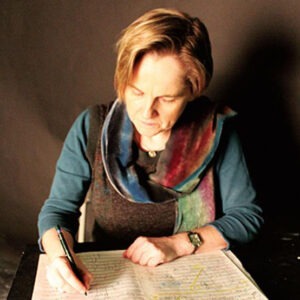
Marian Ingoldsby (b. 1965) is an Irish composer known for a wide-ranging body of work spanning opera, orchestral and choral music, chamber and instrumental pieces, and music for young performers.
Born in Carrick-on-Suir, Co. Tipperary, into a musical family, she came to composition relatively late, having originally trained in piano through the Royal Irish Academy of Music. She studied composition with Gerald Barry at University College Cork, earning an MA and winning the Fleischmann Prize in 1995. She went on to become the inaugural recipient of the Elizabeth Maconchy Fellowship at the University of York, completing a PhD in Composition there in 2000.
Ingoldsby’s music draws on influences ranging from Berg, Schoenberg, and Copland to her longstanding interest in contemporary Irish poetry and older anonymous texts, which she frequently sets to music. Her opera Hot Food with Strangers, commissioned by Opera Theatre Company, premiered in Dublin in 1991 and was performed at Covent Garden the following year. She has since been commissioned by the National Symphony Orchestra of Ireland, the Ulster Orchestra, the Cork International Choral Festival, and the Presteigne Festival in Wales, among many others, and has composed more than fifty works to date.
Alongside composing, Ingoldsby is active as a pianist and repetiteur, and lectures in the Department of Creative and Performing Arts at SETU (formerly Waterford Institute of Technology). Her work for young performers includes the children’s opera Lily’s Labyrinth and a suite of choral pieces for RTÉ Lyric FM and Cór na nÓg, and several of her piano works feature on the Royal Irish Academy of Music syllabus.
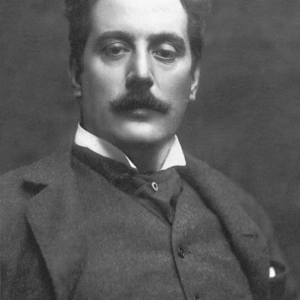
Giacomo Puccini (1858–1924) was an Italian composer whose operas – among them La Bohème, Tosca, and Madama Butterfly – established him as the leading figure of Italian opera after Verdi, prized for his gift for soaring melody and emotional intensity. Born in Lucca into a family with generations of church musicians, he trained at the Milan Conservatory before finding his voice as a composer for the stage, blending Romantic lyricism with an increasingly modern harmonic language.
Though renowned almost exclusively for opera, Puccini occasionally turned to chamber music and for our October repertoire programme we are delighted to include his Crisantemi for string quartet.
In January 1890, deeply moved by the sudden death of his friend Amedeo di Savoia, Duke of Aosta, Puccini composed Crisantemi (Chrysanthemums) for string quartet – reportedly in a single night. Named for the flower long associated with mourning in Italy, the brief, single-movement elegy is built from two haunting themes in C-sharp minor, its intensity growing through chromatic yearning and rich unison climaxes. Puccini later reused its melodic material in Manon Lescaut, and Crisantemi remains one of his few surviving instrumental works – a compact, deeply felt counterpart to the operatic voice for which he is best remembered.
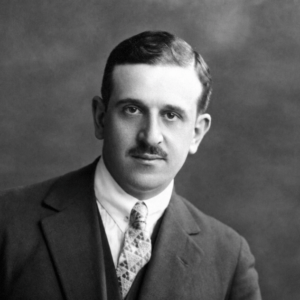
Luís de Freitas Branco (1890–1955) was a Portuguese composer, musicologist, and teacher whose work defined the course of 20th century Portuguese music. Born in Lisbon on 12 October into an aristocratic family, he received a cosmopolitan education, studying piano and violin as a child before training abroad with Engelbert Humperdinck in Berlin and Gabriel Grovlez in Paris. These influences shaped his early output, introducing Impressionist and Expressionist idioms to a largely conservative Portuguese musical culture.
Returning to Lisbon, Freitas Branco became professor of composition at the National Conservatory in 1916, helping to modernise the country’s music education. His style evolved through the 1920s and 1930s into a more restrained Neoclassicism that defined his lasting legacy and was carried forward by his student Joly Braga Santos.
His output includes four symphonies, symphonic poems such as Viriato, a violin concerto, and chamber and vocal works, alongside significant research into early Portuguese music. Forced from his official posts in 1939 for criticising fascist Italy and Germany, he was reinstated in 1947. He died in Lisbon in 1955, aged sixty-five.
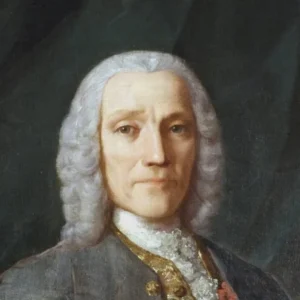
Domenico Scarlatti (1685–1757) was an Italian composer most celebrated for works in opera, oratorio, and sacred music – yet his lasting legacy rests on the 555 harpsichord sonatas he composed, originally intended as teaching exercises. These compact works remain celebrated for their technical daring, inventive freshness, and sheer variety, qualities that continue to challenge and delight performers today. Born in Naples the same year as fellow keyboard giant Johann Sebastian Bach, Scarlatti would go on to push the harpsichord in a direction that looked ahead to the emerging Classical style of Haydn and Mozart.
Scarlatti likely received his earliest musical training from his father, the influential Baroque composer Alessandro Scarlatti. In 1701, at just fifteen, Domenico secured a post as composer and organist at the royal chapel in Naples. Two years later, father and son relocated to Rome, where Domenico studied under some of Italy’s most respected musicians. It was in Rome, around 1709, that Scarlatti took part in a celebrated keyboard contest arranged by Cardinal Ottoboni against George Frideric Handel – Handel was judged the finer organist, Scarlatti the finer harpsichordist, and the two are said to have remained lifelong admirers of one another’s playing.
A pivotal turn came when Scarlatti moved to Lisbon to serve as music tutor to the Portuguese princess Maria Barbara. When she married into the Spanish royal family and became Queen of Spain, Scarlatti followed her to Seville and eventually Madrid, remaining in her service for the rest of his life.
At his death, Scarlatti left behind a vast trove of sonata manuscripts, largely unknown outside the Iberian Peninsula. It wasn’t until 1839 that pianist Carl Czerny brought a selection of these works to wider attention through publication. Over a century later, in 1953, American harpsichordist and scholar Ralph Kirkpatrick produced a definitive critical edition of Scarlatti’s complete works – introducing the numbering system still used by musicians today. The composer found new audiences in the 20th century thanks in part to Vladimir Horowitz, whose acclaimed 1964 recording of Scarlatti’s sonatas introduced them to a broader public.
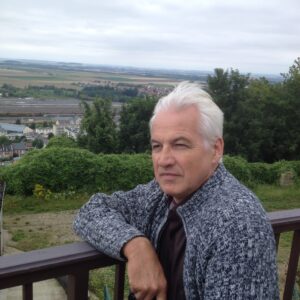
Chiel Meijering (b. 1954) is a renowned Dutch composer celebrated for his eclectic, boundary-pushing music. Trained in composition, percussion, and piano at the Amsterdam Conservatory, he blends classical, pop, jazz, and world music into provocative, emotionally charged works. His operas – including Alzheimer, Styx, and Blauwbaard – often feature daring titles like I Hate Mozart to challenge expectations. A spontaneous creator, he infuses personal experiences into his compositions, securing his place as a distinctive voice in contemporary Dutch music. Candy Box, originally entitled ‘Caixa de dolcos, was composed for the Matangi Quartetin in 2009 to celebrate their 10th anniversary. It is a short but thrilling work, full of movement and frenetic energy. An exciting ending for our Paris to Amsterdam programme.
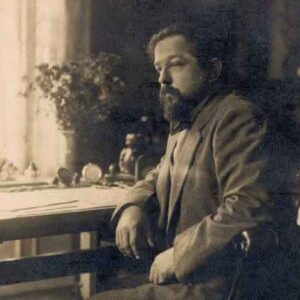
Claude Debussy was a French composer and pioneer of musical Impressionism. A Parisian by upbringing, his legacy endures as a master of mood, timbre, and innovation. He intended to write two string quartets but only completed the one we have in our programme repertoire this month, String Quartet in G minor. The quartet breaks away from the traditional rules of classical harmony and employs the ‘cyclical’ method, returning repeatedly to themes or motifs, sometimes almost obsessively. Subsequently, it is a rich piece, shimmering with colour and texture often evoking a dreamlike quality. Though now considered a landmark work in the chamber music canon, it received mixed reactions when it premiered in Paris on December 29th, 1893. It was new and intriguing but some listeners struggled with the way in which it challenged 19th century chamber music rules. Today, it is a lunchtime gift to us all; a meditation, a dream.
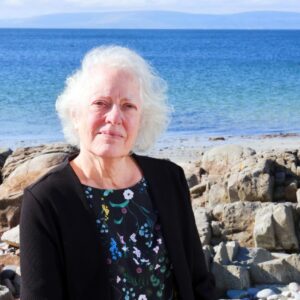
A Galway-based composer, O’Leary’s work is often characterised by intricate textures and a considered exploration of sound with compositions that engage deeply with modernist and postmodernist idioms, often featuring nuanced harmonic language and rhythmic complexity. Her composition, Forever begin… (Fanfare for a New Year) was composed in 2020 and opens the launch of our Autumn/Winter Programme In Conversation: From Paris to Amsterdam
‘every beginning is a promise…’
Written for the MusicConnects series, From Europe with Love, Forever begin was premiered by ConTempo Quartet on 4 February 2020, when the focus was on Ireland. ‘Normally a fanfare is associated with a brass ensemble, and is an announcement of something important which is about to happen. There is a sense of excitement and anticipation, of hope and optimism – of new beginnings. Brendan Kennelly’s iconic poem Begin reflects on these positive feelings and the nature of renewal’ – Jane O’Leary.
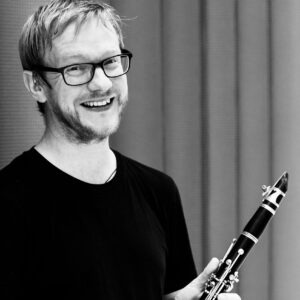
Matthew Berrill is a multi-instrumentalist composer, performer, improviser, arranger, and curator whose work spans contemporary and experimental music. Born in Headford, County Galway, he grew up immersed in music, playing alongside his siblings and developing a deep, intuitive relationship with sound and composition. Berrill’s artistic practice is rooted in both written and improvised music, with a focus on creating works that explore texture, space, and collective creativity. He is recognized as an integral member of numerous ensembles and projects, contributing as a composer and performer across a wide range of genres and settings.
For our concert – Ag Tarraingt Ón Tobar – we are delighted to present four World Premiere arrangements by Berrill:
An raibh tú ar an gCarraig? | Blackbird | Johnny Seoighe | Bean Pháidín
Berrill’s role as a curator further reflects his commitment to fostering new artistic voices and interdisciplinary collaboration. A graduate with a Masters Degree in Music Performance, Berrill’s professional experience is extensive, including involvement with major festivals such as the Galway Jazz Festival, where he has contributed significantly to the cultural landscape of the region. His work is characterized by versatility and a dedication to pushing the boundaries of musical expression, both as a solo artist and within collaborative contexts.
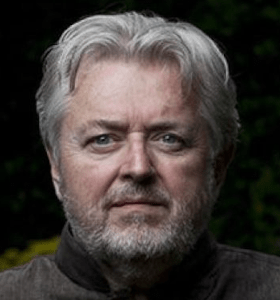
Bill Whelan (b. 1950) is one of Ireland’s most celebrated composers, born on 22 May 1950 in Limerick. Based in County Galway, he has crafted a diverse and influential body of work that spans theatre, film, television, and orchestral compositions.
Ag Tarraingt Ón Tobar – our July concert – has at its centre Stolen Hearts, a powerful composition by Bill Whelan that received its world premiere at the the 2023 Galway International Arts Festival.
Whelan’s global recognition stems from his 1997 Grammy Award-winning score for Riverdance, a piece that transformed Irish traditional music into a worldwide phenomenon. The show’s legacy endures, following a 25th anniversary tour that traveled across the United States, Canada, Germany, and the United Kingdom. To mark this milestone, Whelan completed a new studio recording of the Riverdance music with the RTÉ Concert Orchestra, featuring many of the young musicians who perform with the show today – some of whom were not yet born when the piece first premiered.
Whelan’s orchestral works, including The Seville Suite (commissioned for Expo ’92), The Spirit Of Mayo, The Connemara Suite (which premiered in Carnegie Hall in 2005), and Linen & Lace (a flute concerto written for Sir James Galway in 2014), showcase his ability to blend classical and traditional Irish influences. His contributions to theatre are equally significant, from his musical settings of Ireland’s literary giants – such as W.B. Yeats, Paul Muldoon, and Frank McGuinness – to his collaboration on The Train, a musical inspired by the Irish Women’s Liberation Movement, which premiered at the Dublin Theatre Festival in 2015 and returned to the Abbey Theatre and The MAC in Belfast in 2017.
Beyond composition, Whelan has made a lasting impact as a producer, collaborating with icons like U2, Van Morrison, Kate Bush, Planxty and The Dubliners, and composing scores for films such as Dancing at Lughnasa (starring Meryl Streep), Some Mother’s Son, and Lamb. His work also extends to animation, with the soundtrack for Riverdance – The Animated Adventure, featuring voices from Pierce Brosnan, Brendan Gleeson, and Aisling Bea.
Honoured as a Fellow of the Royal College of Music, a member of Áosdána, and the recipient of two honorary doctorates, Whelan is also an Honorary Freeman of the City of Limerick. His music continues to inspire and unite audiences, bridging tradition and innovation with timeless storytelling.
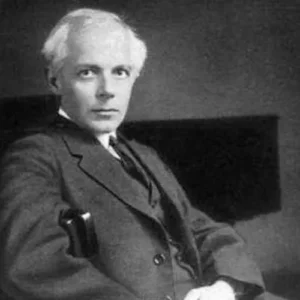
For our July concert – Ag Tarraingt Ón Tobar – we present as part of the evening’s repertoire, Béla Bartók’s dances;
I. Jocul cu bâtă / Stick Dance
II. Brâul / Belt Dance
III. Pe loc / In One Spot
IV. Buciumeana / Dance from Bucsum
V. Poarga Românească / Romanian Polka
VI. Mărunțel / Fast Dance
Béla Bartók (1881–1945) was a pioneering 20th-century composer and a defining figure in Hungarian music. His work blended folk traditions from across Central Europe with modernist innovation, creating a distinctive sound that bridged tradition and avant-garde. Unlike his contemporaries, Bartók drew inspiration from indigenous folk music rather than nationalist themes, collaborating with Zoltán Kodály to document and integrate these melodies into classical compositions. His music—ranging from the Concerto for Orchestra to his six string quartets – remains a cornerstone of the modern repertoire.
Trained at the Liszt Academy in Budapest, Bartók began composing as a child and gained recognition as both a pianist and a professor. His discovery of Transylvanian folk music in 1908 profoundly shaped his artistic direction, infusing his works with rhythmic vitality and harmonic richness. A humanist and atheist, Bartók celebrated cultural diversity, as seen in his Dance Suite (1923), which wove together dances from Central Europe and North Africa.
Forced to flee fascist Hungary in 1940, Bartók settled in New York City, where declining health and financial struggles marked his final years. Yet he continued composing, including the Concerto for Orchestra (commissioned by Serge Koussevitzky) and his Third Piano Concerto, dedicated to his wife. Bartók’s legacy endures: his quartets are hailed as among the most significant of the 20th century, and his orchestral works remain staples of concert halls worldwide. His influence extends to composers like György Ligeti and György Kurtág, cementing his place as a visionary whose music transcends time.
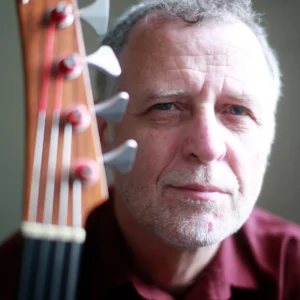
Ronan Guilfoyle (b. 1958) is a towering figure in Irish jazz, renowned as a performer, composer and educator.
At the heart of our June programme is Ronan Guilfoyle’s new clarinet quintet Legacy performed by clarinettist Matthew Berrill and ConTempo Quartet. The work, which meditates on the influence Guilfoyle’s father had on him as an artist, brings together classical and jazz sounds to create a thrilling soundscape in five movements. Guilfoyle’s piece is paired with Ravel’s string quartet, one of the works that the composer associates with his father.
Legacy, composed in 2026 comprises of five movements: Legacy, Mr. B.P’s Interrupted Blues, The Throwdown Hoedown, Embers and Together Again
Guilfolyle shares with us –
‘Legacy, a five-part suite for clarinet and string quartet, is dedicated to my father Brendan, who passed away fifty years ago. He was an extraordinary man, and I’m a musician primarily because of him. He was devoted to music, which he played in the house via his extensive record collection – he had speakers mounted in the downstairs rooms of the house so that if he was playing a recording you could hear it everywhere.
The music was modern classical and modern jazz, which was the soundtrack to my childhood and that of my siblings. He passed away when I was seventeen and I didn’t start playing music myself till the following year, so he never heard the results of the education he gave us – two other siblings also became musicians. This piece is dedicated to and inspired by him and the music he loved. I chose to use string quartet since it is the perfect small classical ensemble, and the clarinet because of its great tradition in both classical and jazz, and the clarinet improvises as well as playing written material. Each movement represents a different aspect of my father and his life.’
Ronan Guilfoyle brings us through each movement of the quintet:
Legacy ‘opens with my father’s theme, one that will reappear later, and evolves in a typical modern jazz fashion’ followed by Mr. B.P’s Interrupted Blues ‘a grooving 12-bar jazz blues, constantly interrupted by string flourishes typical of modern classical music.’ The Throwdown Hoedown is ‘a challenging (the throwdown!) Hoedown-like dance piece for the strings alone. My father loved string quartet music and I think would have loved this!’ Embers ‘emanates from my memory of my father listening to slow movements from the music of Béla Bartók at night, and staring at the embers of the fire.’ And in Together Again, ‘I combine my father’s theme from the opening with that of a theme I wrote for my mother, now also passed on. Musically, they are together again here…’
Ronan Guilfoyle is an impressive figure on the Irish jazz scene and an internationally renowned performer, teacher, and composer. Since the early 1980s, he has established himself as one of the leading exponents of the acoustic bass guitar, performing with jazz luminaries such as Dave Liebman, Kenny Werner, Joe Lovano, John Abercrombie, and Brad Mehldau. His career began with Louis Stewart’s group, and his studies at the Banff Centre for the Arts under mentors like John Abercrombie, Dave Holland, and Steve Coleman further honed his craft. A prolific leader and sideman, Ronan has toured extensively across Europe, Asia, and North America with his own groups and as a collaborator. His discography spans award-winning recordings, including the acclaimed Devsirme (1997), and his compositions seamlessly blend improvised and written music. As a classical composer, he has created works for ensembles like the RTÉ Concert Orchestra, the Opus 20 String Orchestra, and the European Jazz Youth Orchestra, with commissions featuring soloists such as David Liebman and Dermot Dunne. His contributions to jazz composition earned him the Julius Hemphill Jazz Composition Competition in 1997. Renowned for his innovative teaching, Ronan’s book Creative Rhythmic Concepts for Jazz Improvisation is a seminal text on advanced rhythmic techniques. He has lectured globally, including at Berklee College of Music and the International Music Congress (UNESCO), and serves as an Associate Artist of the Royal Academy of Music in London. As the founder and head of the jazz department at Newpark Music Centre in Dublin, he has shaped Ireland’s post-secondary jazz education, cementing his legacy as both an artist and an educator.
Since the early 1980s, Ronan Guilfoyle has established himself as a leading exponent of the acoustic bass guitar, collaborating with jazz luminaries like Dave Liebman, Kenny Werner, and Joe Lovano. His career began with Louis Stewart’s group, and he further honed his craft at the Banff Centre for the Arts under mentors such as John Abercrombie and Dave Holland.
He has led his own ensembles since the mid-1980s, touring globally and recording extensively, including the award-winning Devsirme (1997). His compositions blend improvised and written music, spanning solo piano, chamber, and orchestral works. He has been commissioned by esteemed ensembles like the RTE Concert Orchestra and the European Jazz Youth Orchestra, and his pieces have been performed by jazz icons such as Dave Liebman and Kenny Wheeler. In 1997, he won the prestigious Julius Hemphill Jazz Composition Competition.
A respected educator, Guilfoyle is celebrated for his work on advanced rhythmic techniques in jazz improvisation. His book, Creative Rhythmic Concepts for Jazz Improvisation, is a standard reference on metric modulation and odd-meter playing. He has taught worldwide, including at Berklee College of Music and The New School, and has lectured for UNESCO. As the founder and head of the jazz department at Newpark Music Centre in Dublin, he has pioneered post-secondary jazz education in Ireland.
Claude Debussy (1862–1918) was a French composer whose innovative approach to harmony and orchestration revolutionized classical music. Often linked to the Impressionist movement in art, Debussy rejected rigid musical structures, favouring fluid melodies, rich harmonies, and evocative textures. His works, like Clair de lune and Prélude à l’après-midi d’un faune, broke away from traditional tonality, creating a dreamlike, sensory experience.
Debussy’s String Quartet in G Minor Op.10, III is part of our June programme repertoire and has been chosen to reflect the influence that Debussy had on Maurice Ravel whose music in turn influenced Irish composer, Ronan Guilfoyle. At the centre of our June programme is the World Premiere of Ronan Guilfolyle’s clarinet quintet, ‘Legacy’.
Born in Saint-Germain-en-Laye, France, Debussy showed early musical talent and entered the Paris Conservatoire at age 10. His rebellious spirit clashed with the Conservatoire’s conservative teachings, but he thrived by exploring new influences from Russian composers like Mussorgsky to Javanese gamelan music and Symbolist poetry.
His opera Pelléas et Mélisande (1902) and orchestral piece La Mer (1905) showcased his unique style, blending innovation with emotional depth. Though initially controversial, Debussy’s music gained widespread acclaim for its beauty and originality. His legacy extends beyond classical music, inspiring film composers, jazz musicians, and modern artists.
Debussy’s life – marked by artistic passion, personal turmoil, and financial struggles – ended in 1918, but his influence endures. Today, he is celebrated as a pioneer who redefined the boundaries of sound and expression.
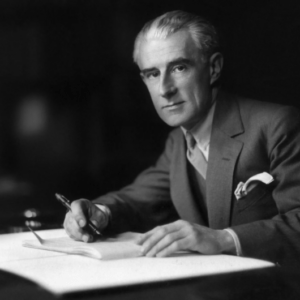
Maurice Ravel (1875–1937) was born on 7 March 1875 in Ciboure, France, to a Basque mother and Swiss father. He became one of the most influential composers of the early 20th century. Raised in Paris, Ravel studied at the Paris Conservatoire, where his technical brilliance and perfectionism quickly became evident.
Ravel’s music blends Impressionism, neoclassicism, and folk influences, creating a style marked by elegance, rhythmic complexity, and orchestral richness. His works, such as Boléro, Pavane pour une infante défunte, and Daphnis et Chloé, showcase his mastery of harmony and melody. Though often linked to Debussy’s Impressionism, Ravel’s music stands apart in its clarity and structural innovation.
Despite declining health in his later years, Ravel continued composing until his death on 28 December 1937. His legacy endures as a bridge between Romanticism and modernism, with his compositions remaining staples of classical music worldwide.
The 1st and 2nd movements of Ravel’s String Quartet in F Major feature in our June programme.The first movement (Allegro moderato) is lyrical and expressive, adhering to classical sonata form while blending unconventional harmonies. It features soaring violin lines and rich, emotive themes in F Major and D Minor, influenced by Wagner but forward-thinking in structure.
The second movement (scherzo) defies tradition as a playful scherzo dominated by pizzicato and innovative string techniques like tremolo and mutes. It incorporates modal scales and Basque-inspired rhythms, creating a vibrant, rhythmic, and texturally diverse soundscape.
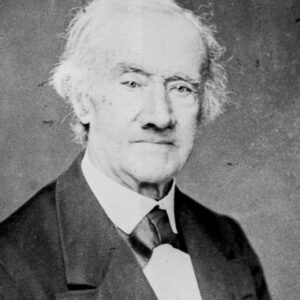
Friedrich August Kummer (1797-1879) was born on the 5th of August, 1797 in Meiningen, Germany. A cellist, oboist, composer and teacher, Kummer was known for his compositions for cello.
He studied under Justus Johann Friedrich Dotzauer, the principal cellist of the Dresden Court Orchestra. In 1814, he joined the Dresden Court Orchestra as an oboist, and in the early 1850s, he had replaced Dotzauer as principal cellist, and remained in this position until his retirement in 1864. Kummer died on the 22nd of August, 1879, in Dresden.
Kummer’s Variations on ‘Judus Maccabeus’ of G.F. Handel features in our May repertoire. In the composition of this work, he takes the famous ‘See the conqu’ring hero comes’ theme from G. F. Handel’s Judas Maccabaeus, creating his own variations or ‘riffs’ upon it. While the exact composition date is unknown, it was published in 1870.
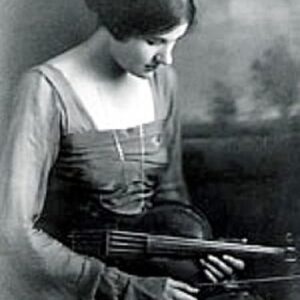
Rebecca Clarke (1886-1979) was an English born violist and composer. She was regarded as one of the first female professional violists and a trailblazer for women in classical music. Born in Harrow, England, she spent a good portion of her life in the United States.
Although she is known as a renowned violist, Clarke initially studied the violin under Hans Wessely in the Royal Academy of Music in London in 1903. She was later withdrawn from the Academy by her father after an unwanted proposal from her harmony teacher, Percy Hilder Miles. Unfortunately, she was thrown out of her father’s home in 1910, and depended on her violin to support herself. She managed well, and in 1913, she became one of the first women to be employed by Henry Wood’s Queen’s Hall Orchestra.
Clarke’s composition Lullaby & Grotesque was composed for viola and cello between 1916-1918 and features in our programme in May 2026. Whilst Lullaby reflects her sensitivity to texture and colour combining late Romantic warmth with early modern harmonic explorations, Grotesque with its dissonance and bold rhythms is darker perhaps reflecting the times it was written in, namely World War I.
The World Premiere of this piece was performed by Rebecca Clarke herself alongside cellist, May Mukle, in New York in 1918. Later on in 1927, Clarke would establish the pianoforte “the English Ensemble”, with May Mukle, Kathleen Long and Marjorie Hayward.
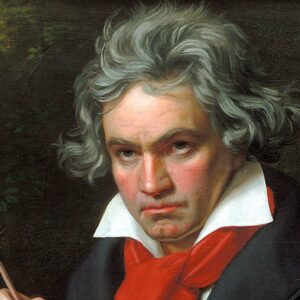
Ludwig van Beethoven (1770-1827) was born in Bonn, Germany and is one of the most revered and influential composers in Western classical music. His work bridged classical and romantic eras and expanded the scope of instrumental music, revealing how music could convey deep emotion and intellectual depth.
While rooted in the traditions of Mozart and Haydn, he pushed boundaries by integrating vocal and instrumental music, most famously in his Ninth Symphony (“Ode to Joy”), which combined orchestra, choir, and soloists. His compositions from symphonies to sonatas are celebrated for their emotional intensity, intellectual rigour, and structural brilliance.
Beethoven’s Eyeglasses Duet was composed in 1796 and features as part of our May programme. It is a charming and lesser-known piece from his early period, consisting of two movements. Allegro is a bright and spirited opening movement, showcasing Beethoven’s youthful energy and classical style followed by Minuetto, elegant and graceful reflecting the refined character of minuets common in the late 18th century.
Though not written with public performance in mind, this piece gives a wonderful glimpse into Beethoven’s early compositional voice, bridging the classical traditions of Haydn and Mozart with his own emerging style. Beethoven composed this piece for his friend, cellist, Baron Nikolaus Zmeskall, and he intended to play it with him (on viola) for leisure. The title of the piece refers to the fact that the two friends had to wear glasses to read their music.
Beethoven’s music transcended his time, inspiring generations of composers and listeners. His ability to convey universal human experiences of joy, struggle, triumph ensures his place as a defining figure in art and culture.
Jane O’Leary (b. 1946) is a Galway based composer whose work is often characterised by intricate textures and a considered exploration of sound with compositions that engage deeply with modernist and postmodernist idioms, often featuring nuanced harmonic language and rhythmic complexity.
Our May programme features the 1st Movement of O’Leary’s As if One, which was composed in 2016. The composer shared some insights with us about this piece –
‘This duo for viola and cello follows a number of pieces featuring cello and other instruments which I have composed for Martin Johnson (cello and piano, cello and harp). I am fascinated by string sounds and the multitude of different ways in which the strings can be resonated. I am also intrigued by the overlapping pitches between these two instruments. The duo is conceived almost as if written for a single instrument (although with two voices), and the musicians should connect intimately with each other’s sounds. Two instruments, two bows, four hands, 8 strings – all functioning ‘as if one.’’
A graduate of Vassar College, Jane O’Leary holds a PhD in composition from Princeton University. Her music has been performed worldwide including at the Kennedy Center, the Lincoln Center, Carnegie Hall, Centre Culturel Irlandais, Paris amongst many others.
In 2025, she was awarded the National Concert Hall Lifetime Achievement Award for her significant contribution to Irish music and in 2026, commissioned in honour of RTE’s centenary, Jane O’Leary’s Fanfare: From 2RN to RTE – Celebrating 100 Years had its World Premiere at the National Concert Hall.
Photo credit: Mike Shaughnessy
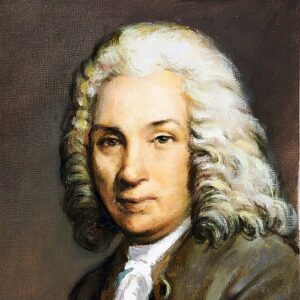
Carl Stamitz (1745-1801) was a prominent composer of the Mannheim School in Germany and known for his elegant and clear melodic lines.
His Duetto for viola & cello in C Major, no.1 features as part of our May programme. This duet is typically bright, graceful, and conversational, reflecting the Mannheim School’s emphasis on dynamics and phrasing showcasing the rich, warm tone of the cello and the lyrical, mellow tone of the viola.
It is not known when Stamitz wrote much of his chamber music, but judging from the style of this piece, it would have been written in the latter part of his life between 1770 and 1790.
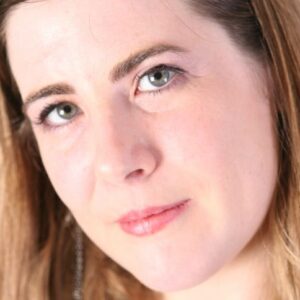
Alyson Barber has composed an eclectic variety of pieces, including collaborations for theatre and animated shorts. She has had pieces performed in London, Barcelona and Dublin by groups such as The London Sinfionetta, Concorde, CoMA London, NMC duo Sarah Leonard and Robin Michael, Royal Academy of Music Symphony Orchestra, Pegasus Choir, Kansas State University Trumpet Choir and the Academy Trumpet Ensemble.
Her solo viola piece ‘Twists and Turns’ was recently performed at the 2013 ISCM World Music Days in Slovakia and Austria by Milan Pala. She has collaborated on several animated shorts, one of which featured on the French television station TF1 and another at thirty festivals throughout Europe, Asia and America, winning two awards. Her music has also featured as part of the 2008 London Organ Day.
In 2007 she was awarded the Bill Whelan International Music Bursary and the Isemena Holland award, and more recently she received the Mosco Carner Prize. She is currently undertaking a PhD at the DIT Conservatory of Music and Drama with Gráinne Mulvey, and previously she completed a Masters in Composition at the Royal Academy of Music, London where she studied with Simon Bainbridge.
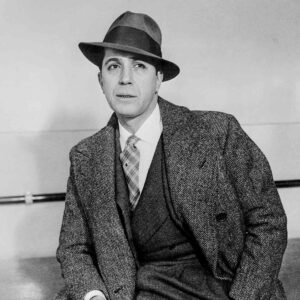
Carlos Gardel, born on December 11, 1890, was a French-Argentine singer, songwriter, composer, and actor, often heralded as the most prominent figure in the history of tango. Known for his baritone voice and his significant contribution to the evolution of tango, his life and music continue to be celebrated more than a century after his birth.
In his early career, Gardel sang a wide variety of songs, including folklore, waltzes, zarzuelas, and operettas. However, his big break came in 1917 with his rendition of “Mi Noche Triste” (My Sad Night), which is often considered the first sentimental tango song. The song’s success transformed tango from a dance genre to a song genre and helped establish Gardel’s reputation as a leading vocalist.
Gardel began his international career in 1928, when he performed in Paris, France. He was met with widespread acclaim and became an international star, acting in movies and recording music in the United States. During this period, Gardel’s style evolved, and he became more refined and expressive, which further expanded his appeal. He was also a talented composer, writing several of his own songs.
Gardel’s career was tragically cut short when he died in an airplane crash in Medellín, Colombia, on June 24, 1935. He was in the midst of a tour and had just performed a series of concerts in Colombia. His sudden death at the height of his fame led to a massive outpouring of grief in Latin America and around the world.
Today, Carlos Gardel is remembered as the most influential figure in the history of tango. He is revered for his rich baritone voice, his charismatic stage presence, and his profound influence on the evolution of tango music.
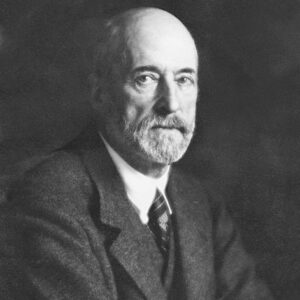
(Edward) Swan Hennessy (1866–1929) was born in Rockford, Illinois (USA) and studied at the Conservatory of Music in Stuttgart, Germany, with Percy Goetschius (composition) and Edmund Alwens (piano), 1878–86. After some years of traveling in Europe with homes in England and Italy, he settled in Paris from around 1903. Initially influenced by Schumann and the late Romantic school in Germany, he became increasingly inspired by French Impressionism which is most evident in his pre-World War I works for piano and voice. From 1912, he was part of a group of Breton composers in Paris who developed a pan-Celtic identity which sought to fuse art music with elements from Breton and Irish traditional music and culture and within which Hennessy represented the Irish side (his father was an Irish emigrant from Cork). He particularly cultivated this unique style in his post-1920 chamber music. Hennessy exclusively focused on piano music, French mélodies and chamber music (duos, trios, quartets).
-Axel Klein
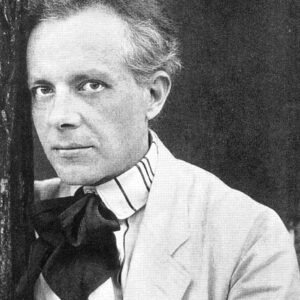
Béla Bartók (March 25, 1881-September 26, 1945), the greatest Hungarian composer, was one of the most significant musicians of the twentieth century. He shared with his friend Zoltán Kodály, another leading Hungarian composer, a passion for ethnomusicology. His music was invigorated by the themes, modes, and rhythmic patterns of the Hungarian and other folk music traditions he studied, which he synthesized with influences from his contemporaries into his own distinctive style.
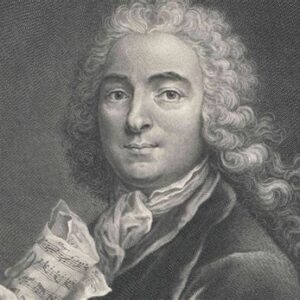
Jean-Marie Leclair, the Elder (born May 10, 1697, Lyon—died Oct. 22, 1764, Paris) was a French violinist, composer, and dancing master who established the French school of violin playing. In 1722 Leclair was principal dancer and ballet master at Turin. After finishing his violin studies with G.B. Somis, he went to Paris and began in 1728 a brilliant career as a violinist-composer. By 1732 he was the subject of an article in J.G. Walther’s Musicalisches Lexicon. He later became a musician of the royal chamber and visited several princely courts. Leclair, whose last years were clouded by despair and distrust, was murdered … He published four books of sonatas for violin and continuo, two books of sonatas for two unaccompanied violins, five sets of Récréations for two violins and continuo, and two sets of string concerti. He also wrote an opera, Scylla et Glaucus.
From Britannica
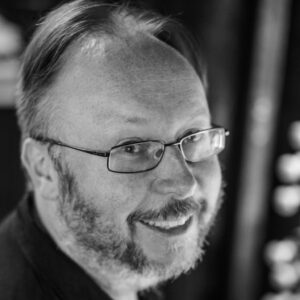
Paul Ayres was born in London, studied music at Oxford University, and now works freelance as a composer & arranger, choral conductor & musical director, and organist & accompanist. He has received over one hundred commissions, and his works have been awarded composition prizes in Bulgaria, Canada, Croatia, New Zealand, Poland, Russia, Spain, Switzerland, the UK and the USA. Paul particularly enjoys “re-composing” classical works (Purcell, Bach, Handel, Fauré) and “classicizing” pop music (jazz and show tunes, The Beatles, Happy Hardcore).
Paul conducts City Chorus, Questors Choir, and Morning Chorus, accompanies Harrow Choral Society and Concordia Voices, and is associate accompanist of Crouch End Festival Chorus. He has led many music education workshops for children, and played piano for improvised comedy shows and musical theatre. Please visit www.paulayres.co.uk to find out more.
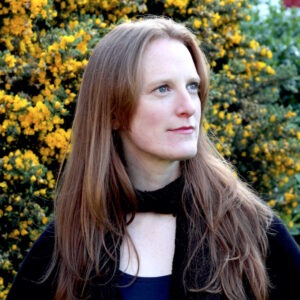
Judith Ring is a composer / musician / performer / artist and all round music lover based in Dublin, Ireland. She has been writing music for over 25 years and has been greatly inspired by living in such places as Berlin, Bamberg, London, York, Paris and Dublin. In general my music stems from the electro-acoustic world and its core technique is based on the practices of musique concrète. Over the years this has expanded and been influenced by more improvised and instrumental territories derived from a deep exploration of instrumental timbre through collaborative projects with a large number of solo musicians. Her music has been distinguished by its richly textural qualities and meticulous layering techniques. A key part of my creative process involves recording and manipulating acoustic sounds, blending both traditional and extended instrumental techniques. In recent years, Ring’s compositional approach has evolved toward a more tonal language, placing greater emphasis on beauty and emotional expression in both the acoustic and electro-acoustic domain. Her compositions often tell stories that reflect the current state of the world.
Ring’s work has been performed by numerous orchestras and ensembles in Europe, North America, Asia and Australia including the National Symphony Orchestra, Concorde ensemble (Ireland), Crash ensemble (Ireland), The Guinness Choir (Ireland), University of York chamber orchestra (UK), Bradyworks (Canada), Percussemble (Germany) and Sepia ensemble (Poland). I have also written for many wonderful musicians such as Christian-Pierre La Marca (cello) + Félicien Brut (accordion), Lina Andonovska (flute), Alex Raineri (piano), Larissa O’Grady (viola),Dermot Dunne (accordion), Kate Ellis (cello), Martin Johnson (cello), Adele Johnson (viola), Malachy Robinson (double bass), Michelle O’Rourke (mezzo soprano), Garth Knox (viola), Natasha Lohan (mezzo soprano), Rolf Hind (piano), Paul Roe (clarinet), Jane O’Leary (piano), Laura Moody (cello), Beau Stocker (percussion), Damien Harron (percussion), Panayiotis Demopoulos (piano), Valerie Pearson (violin), Elisabeth Smalt (adapted viola), Nathalie Forget (Ondes Martenot), Andre Leroux (tenor saxophone) and many more.
For 3 years, Judith Ring and Laura Hyland ran a bi-monthly night called Listen at Lilliput at Lilliput Press in Stoneybatter, Dublin. This was a platform for musicians, composers and soundartists of all descriptions to showcase new and old work in an intimate and sympathetic listening environment.
After completing her PhD by composition at the University of York, UK in 2009, Ring returned to Ireland to re-establish herself on the Irish music scene. Since then she has expanded her musical output by writing for theatre (OFF PLAN by Simon Doyle), putting together a multidisciplinary festival called Sensorium with two colleagues from York, Angie Atmadjaja and Emily Kalies (as The-Link-Project) and being a band member of Clang Sayne and vocal trio Silver Kites.
Currently, she is teaching composition at Trinity College Dublin and the Royal Irish Academy of Music.
Find out more about Judith Ring at her website.
MusicConnects’ March 2026 repertoire will feature the World Premiere of Judith Ring’s string quartet ‘Raise a Tragic Chorus in a Gale’. This piece is inspired by the Irish landscape and how it is shaped by the weather.
Photo-by-Laura-Sheeran
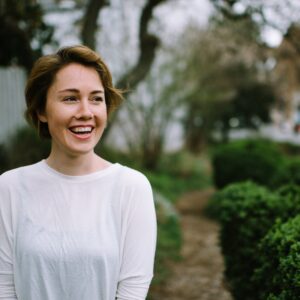
Caroline Shaw is a musician who moves among roles, genres, and mediums, trying to imagine a world of sound that has never been heard before but has always existed. She works often in collaboration with others, as producer, composer, violinist, and vocalist. Shaw is the recipient of the Pulitzer Prize in Music, an honorary doctorate from Yale, four Grammys, and a Thomas J. Watson Fellowship. She has written and produced for iconic artists and ensembles across the musical spectrum, including Rosalía, Renée Fleming, Yo-Yo Ma, Tiler Peck, Nas, Kanye West, the LA Phil, the NY Phil, and others. Recent tv/film/stage scoring projects include “Leonardo Da Vinci” (Ken Burns/PBS), “Julie Keeps Quiet (Leonardo Van Dijl), “Fleishman is in Trouble” (FX/Hulu), “The Sky Is Everywhere” (Josephine Decker/A24), vocal work with Rosalía (MOTOMAMI), “The Crucible” (Lyndsey Turner/National Theatre), “Partita” (Justin Peck/NYC Ballet), “Moby Dick” (Wu Tsang), and “LIFE” (Gandini Juggling/Merce Cunningham Trust). Current touring projects include shows with Sō Percussion, Ringdown, Attacca Quartet, Roomful of Teeth, Graveyards & Gardens, Gabriel Kahane, and Kamus Quartet. Her favorite color is yellow, and her favorite smell is rosemary.
Find out more about Caroline Shaw at her website.
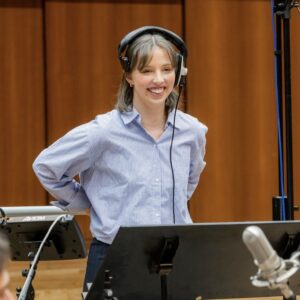
Crea Sullivan is an Irish composer, orchestrator, and violinist whose lush, evocative orchestral scores span film, television, video games, theatre, and concert performance. Her music has been recorded by world-class ensembles including the Royal Scottish National Orchestra, Budapest Art Orchestra, and at AIR Studios in London. In 2025, she was awarded ‘Best New Composer’ at the Kinsale Shark Awards, recognising her distinctive voice and storytelling through sound.
Passionate about orchestration and collaboration, Crea is assisting and orchestrating for award-winning composer Sandrine Rudaz on two feature films, and recently provided additional orchestration forNainita Desai‘s latestNetflixdocumentary, ‘Murder in Monaco‘. In 2025, she worked onAVAWAVESscore for The Buccaneers Season 2 (Apple TV) providing music copying and preparation. She previously worked closely withJohn Lunn(Downton Abbey, The Last Kingdom) as part of theRoyal Scottish National Orchestra’s Film Composers Lab, where she received one-on-one mentorship and orchestral recording experience. Alongside her screen work, this year she was commissioned byUCIMRfor a new string quartet, ‘Awakenings‘, which was performed by theConTempo Quartetin a series of multimedia concerts across London, Dublin, Bucharest, and more.
Inspired by the power of storytelling through music and the expressive possibilities of the orchestra, Crea’s goal is to continue crafting scores that immerse audiences in richly textured emotional worlds, across film, television, and interactive media.
Find out more about Crea Sullivan at her website.
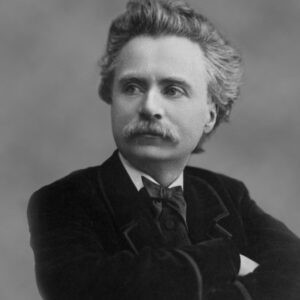
‘Edvard Grieg grew up in Bergen, Norway, at a time when artistic and intellectual circles in the country were heavily influenced by Danish and German cultures. As he entered his twenties, this began to change, and Grieg was caught up in a national awakening, with artists in every medium seeking a specifically Norwegian cultural identity. He was one of the first major composers from the Nordic lands to embrace the Romantic nationalism that swept across Europe in the late 19th century, and in keeping with this aesthetic he incorporated traditional folk music, drawing inspiration from the history and mythology of his homeland. In addition, he looked to landscape as a direct source of inspiration—a trend that resonates more widely in Nordic cultural nationalisms. Indeed, it was in part the evocation of landscape that encouraged some of the more innovatory features in his music, recognized by some as a kind of proto-Impressionism.’ – Jim Samson
Read more at Chamber Music Society.
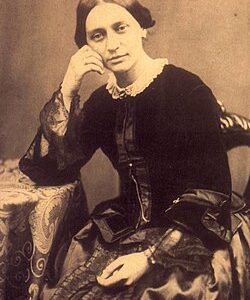
Though often remembered primarily as her husband’s muse, and though her relationship with Brahms has received much speculation over the years, we feature Clara Schumann as the remarkable composer she was, particularly skilled in the Lieder genre (German Art songs). While she never wrote for the string quartet, these arrangements of some of her most beloved lieder display her compositional prowess and her sensitive phrasing that can be heard in many of Brahms’ works. Brahms greatly admired her musicianship and valued her feedback on his work above all else.
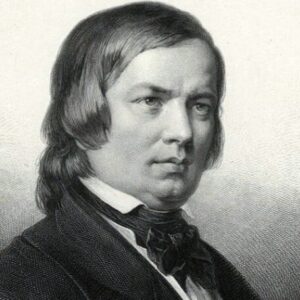
Robert Schumann wrote his three string quartets as part of a remarkable burst of creativity in 1842, often described as his ‘year of chamber music’. Two years previously, he and Clara had finally married after many years of personal and legal struggle with Clara’s father who did not approve of the match. Clara, an incredibly talented pianist and composer in her own right, was Robert’s muse, artistic collaborator and most perceptive critic. The first movement, which we will hear today, is deeply lyrical and intimate with many scholars hearing Schumann’s devotion for Clara in the work. Clara herself said that Robert’s set of three string quartets revealed his “most tender and beautiful side.” It was more than a decade after this work was composed when Brahms was welcomed into Clara and Robert’s world, and yet the lyricism and emotional depth of Robert’s quartets left a lasting impression of Brahms’ own approach to quartet writing.
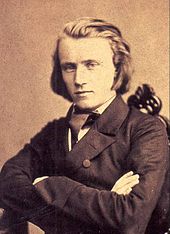
Johannes Brahms took the string quartet very seriously and struggled with it more than any other form. He felt the weight of those who had gone before, most particularly Beethoven and Schumann, and destroyed more than a dozen attempts before allowing anything to be published. He was finally satisfied with his String Quartet No. 1 and described it to Clara as “one of my finest works… You have never before had such a beautiful work from me.” The Romanze is unusually exposed and vulnerable, and many scholars believe the movement speaks to Clara.
Come on this journey with us. Help us make many generations of musicians and music lovers in Galway and beyond.
Support Us