
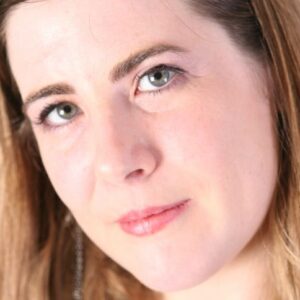
Alyson Barber has composed an eclectic variety of pieces, including collaborations for theatre and animated shorts. She has had pieces performed in London, Barcelona and Dublin by groups such as The London Sinfionetta, Concorde, CoMA London, NMC duo Sarah Leonard and Robin Michael, Royal Academy of Music Symphony Orchestra, Pegasus Choir, Kansas State University Trumpet Choir and the Academy Trumpet Ensemble.
Her solo viola piece ‘Twists and Turns’ was recently performed at the 2013 ISCM World Music Days in Slovakia and Austria by Milan Pala. She has collaborated on several animated shorts, one of which featured on the French television station TF1 and another at thirty festivals throughout Europe, Asia and America, winning two awards. Her music has also featured as part of the 2008 London Organ Day.
In 2007 she was awarded the Bill Whelan International Music Bursary and the Isemena Holland award, and more recently she received the Mosco Carner Prize. She is currently undertaking a PhD at the DIT Conservatory of Music and Drama with Gráinne Mulvey, and previously she completed a Masters in Composition at the Royal Academy of Music, London where she studied with Simon Bainbridge.
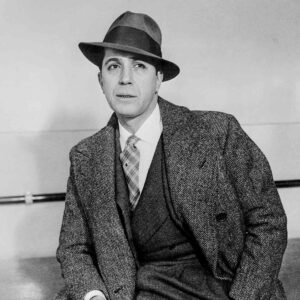
Carlos Gardel, born on December 11, 1890, was a French-Argentine singer, songwriter, composer, and actor, often heralded as the most prominent figure in the history of tango. Known for his baritone voice and his significant contribution to the evolution of tango, his life and music continue to be celebrated more than a century after his birth.
In his early career, Gardel sang a wide variety of songs, including folklore, waltzes, zarzuelas, and operettas. However, his big break came in 1917 with his rendition of “Mi Noche Triste” (My Sad Night), which is often considered the first sentimental tango song. The song’s success transformed tango from a dance genre to a song genre and helped establish Gardel’s reputation as a leading vocalist.
Gardel began his international career in 1928, when he performed in Paris, France. He was met with widespread acclaim and became an international star, acting in movies and recording music in the United States. During this period, Gardel’s style evolved, and he became more refined and expressive, which further expanded his appeal. He was also a talented composer, writing several of his own songs.
Gardel’s career was tragically cut short when he died in an airplane crash in Medellín, Colombia, on June 24, 1935. He was in the midst of a tour and had just performed a series of concerts in Colombia. His sudden death at the height of his fame led to a massive outpouring of grief in Latin America and around the world.
Today, Carlos Gardel is remembered as the most influential figure in the history of tango. He is revered for his rich baritone voice, his charismatic stage presence, and his profound influence on the evolution of tango music.
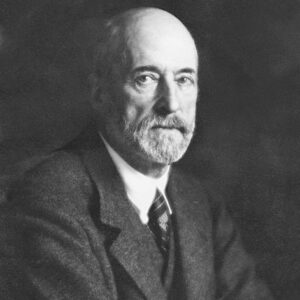
(Edward) Swan Hennessy (1866–1929) was born in Rockford, Illinois (USA) and studied at the Conservatory of Music in Stuttgart, Germany, with Percy Goetschius (composition) and Edmund Alwens (piano), 1878–86. After some years of traveling in Europe with homes in England and Italy, he settled in Paris from around 1903. Initially influenced by Schumann and the late Romantic school in Germany, he became increasingly inspired by French Impressionism which is most evident in his pre-World War I works for piano and voice. From 1912, he was part of a group of Breton composers in Paris who developed a pan-Celtic identity which sought to fuse art music with elements from Breton and Irish traditional music and culture and within which Hennessy represented the Irish side (his father was an Irish emigrant from Cork). He particularly cultivated this unique style in his post-1920 chamber music. Hennessy exclusively focused on piano music, French mélodies and chamber music (duos, trios, quartets).
-Axel Klein
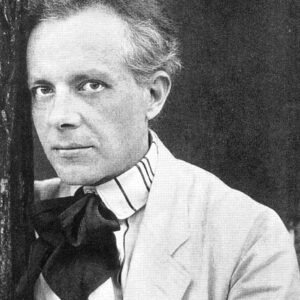
Béla Bartók (March 25, 1881-September 26, 1945), the greatest Hungarian composer, was one of the most significant musicians of the twentieth century. He shared with his friend Zoltán Kodály, another leading Hungarian composer, a passion for ethnomusicology. His music was invigorated by the themes, modes, and rhythmic patterns of the Hungarian and other folk music traditions he studied, which he synthesized with influences from his contemporaries into his own distinctive style.
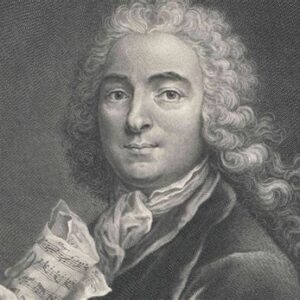
Jean-Marie Leclair, the Elder (born May 10, 1697, Lyon—died Oct. 22, 1764, Paris) was a French violinist, composer, and dancing master who established the French school of violin playing. In 1722 Leclair was principal dancer and ballet master at Turin. After finishing his violin studies with G.B. Somis, he went to Paris and began in 1728 a brilliant career as a violinist-composer. By 1732 he was the subject of an article in J.G. Walther’s Musicalisches Lexicon. He later became a musician of the royal chamber and visited several princely courts. Leclair, whose last years were clouded by despair and distrust, was murdered … He published four books of sonatas for violin and continuo, two books of sonatas for two unaccompanied violins, five sets of Récréations for two violins and continuo, and two sets of string concerti. He also wrote an opera, Scylla et Glaucus.
From Britannica
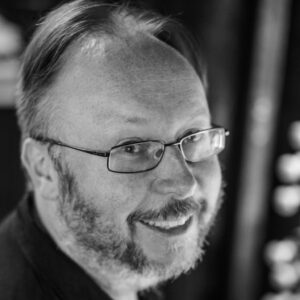
Paul Ayres was born in London, studied music at Oxford University, and now works freelance as a composer & arranger, choral conductor & musical director, and organist & accompanist. He has received over one hundred commissions, and his works have been awarded composition prizes in Bulgaria, Canada, Croatia, New Zealand, Poland, Russia, Spain, Switzerland, the UK and the USA. Paul particularly enjoys “re-composing” classical works (Purcell, Bach, Handel, Fauré) and “classicizing” pop music (jazz and show tunes, The Beatles, Happy Hardcore).
Paul conducts City Chorus, Questors Choir, and Morning Chorus, accompanies Harrow Choral Society and Concordia Voices, and is associate accompanist of Crouch End Festival Chorus. He has led many music education workshops for children, and played piano for improvised comedy shows and musical theatre. Please visit www.paulayres.co.uk to find out more.
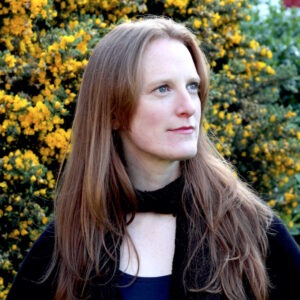
Judith Ring is a composer / musician / performer / artist and all round music lover based in Dublin, Ireland. She has been writing music for over 25 years and has been greatly inspired by living in such places as Berlin, Bamberg, London, York, Paris and Dublin. In general my music stems from the electro-acoustic world and its core technique is based on the practices of musique concrète. Over the years this has expanded and been influenced by more improvised and instrumental territories derived from a deep exploration of instrumental timbre through collaborative projects with a large number of solo musicians. Her music has been distinguished by its richly textural qualities and meticulous layering techniques. A key part of my creative process involves recording and manipulating acoustic sounds, blending both traditional and extended instrumental techniques. In recent years, Ring’s compositional approach has evolved toward a more tonal language, placing greater emphasis on beauty and emotional expression in both the acoustic and electro-acoustic domain. Her compositions often tell stories that reflect the current state of the world.
Ring’s work has been performed by numerous orchestras and ensembles in Europe, North America, Asia and Australia including the National Symphony Orchestra, Concorde ensemble (Ireland), Crash ensemble (Ireland), The Guinness Choir (Ireland), University of York chamber orchestra (UK), Bradyworks (Canada), Percussemble (Germany) and Sepia ensemble (Poland). I have also written for many wonderful musicians such as Christian-Pierre La Marca (cello) + Félicien Brut (accordion), Lina Andonovska (flute), Alex Raineri (piano), Larissa O’Grady (viola),Dermot Dunne (accordion), Kate Ellis (cello), Martin Johnson (cello), Adele Johnson (viola), Malachy Robinson (double bass), Michelle O’Rourke (mezzo soprano), Garth Knox (viola), Natasha Lohan (mezzo soprano), Rolf Hind (piano), Paul Roe (clarinet), Jane O’Leary (piano), Laura Moody (cello), Beau Stocker (percussion), Damien Harron (percussion), Panayiotis Demopoulos (piano), Valerie Pearson (violin), Elisabeth Smalt (adapted viola), Nathalie Forget (Ondes Martenot), Andre Leroux (tenor saxophone) and many more.
For 3 years, Judith Ring and Laura Hyland ran a bi-monthly night called Listen at Lilliput at Lilliput Press in Stoneybatter, Dublin. This was a platform for musicians, composers and soundartists of all descriptions to showcase new and old work in an intimate and sympathetic listening environment.
After completing her PhD by composition at the University of York, UK in 2009, Ring returned to Ireland to re-establish herself on the Irish music scene. Since then she has expanded her musical output by writing for theatre (OFF PLAN by Simon Doyle), putting together a multidisciplinary festival called Sensorium with two colleagues from York, Angie Atmadjaja and Emily Kalies (as The-Link-Project) and being a band member of Clang Sayne and vocal trio Silver Kites.
Currently, she is teaching composition at Trinity College Dublin and the Royal Irish Academy of Music.
Find out more about Judith Ring at her website.
MusicConnects’ March 2026 repertoire will feature the World Premiere of Judith Ring’s string quartet ‘Raise a Tragic Chorus in a Gale’. This piece is inspired by the Irish landscape and how it is shaped by the weather.
Photo-by-Laura-Sheeran
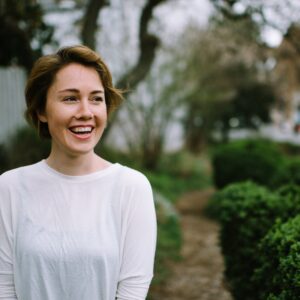
Caroline Shaw is a musician who moves among roles, genres, and mediums, trying to imagine a world of sound that has never been heard before but has always existed. She works often in collaboration with others, as producer, composer, violinist, and vocalist. Shaw is the recipient of the Pulitzer Prize in Music, an honorary doctorate from Yale, four Grammys, and a Thomas J. Watson Fellowship. She has written and produced for iconic artists and ensembles across the musical spectrum, including Rosalía, Renée Fleming, Yo-Yo Ma, Tiler Peck, Nas, Kanye West, the LA Phil, the NY Phil, and others. Recent tv/film/stage scoring projects include “Leonardo Da Vinci” (Ken Burns/PBS), “Julie Keeps Quiet (Leonardo Van Dijl), “Fleishman is in Trouble” (FX/Hulu), “The Sky Is Everywhere” (Josephine Decker/A24), vocal work with Rosalía (MOTOMAMI), “The Crucible” (Lyndsey Turner/National Theatre), “Partita” (Justin Peck/NYC Ballet), “Moby Dick” (Wu Tsang), and “LIFE” (Gandini Juggling/Merce Cunningham Trust). Current touring projects include shows with Sō Percussion, Ringdown, Attacca Quartet, Roomful of Teeth, Graveyards & Gardens, Gabriel Kahane, and Kamus Quartet. Her favorite color is yellow, and her favorite smell is rosemary.
Find out more about Caroline Shaw at her website.
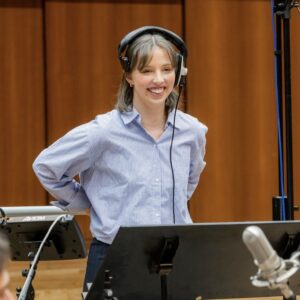
Crea Sullivan is an Irish composer, orchestrator, and violinist whose lush, evocative orchestral scores span film, television, video games, theatre, and concert performance. Her music has been recorded by world-class ensembles including the Royal Scottish National Orchestra, Budapest Art Orchestra, and at AIR Studios in London. In 2025, she was awarded ‘Best New Composer’ at the Kinsale Shark Awards, recognising her distinctive voice and storytelling through sound.
Passionate about orchestration and collaboration, Crea is assisting and orchestrating for award-winning composer Sandrine Rudaz on two feature films, and recently provided additional orchestration forNainita Desai‘s latestNetflixdocumentary, ‘Murder in Monaco‘. In 2025, she worked onAVAWAVESscore for The Buccaneers Season 2 (Apple TV) providing music copying and preparation. She previously worked closely withJohn Lunn(Downton Abbey, The Last Kingdom) as part of theRoyal Scottish National Orchestra’s Film Composers Lab, where she received one-on-one mentorship and orchestral recording experience. Alongside her screen work, this year she was commissioned byUCIMRfor a new string quartet, ‘Awakenings‘, which was performed by theConTempo Quartetin a series of multimedia concerts across London, Dublin, Bucharest, and more.
Inspired by the power of storytelling through music and the expressive possibilities of the orchestra, Crea’s goal is to continue crafting scores that immerse audiences in richly textured emotional worlds, across film, television, and interactive media.
Find out more about Crea Sullivan at her website.
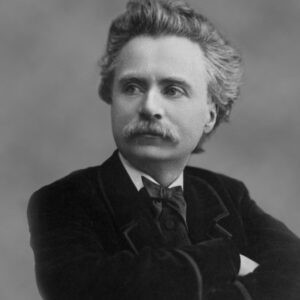
‘Edvard Grieg grew up in Bergen, Norway, at a time when artistic and intellectual circles in the country were heavily influenced by Danish and German cultures. As he entered his twenties, this began to change, and Grieg was caught up in a national awakening, with artists in every medium seeking a specifically Norwegian cultural identity. He was one of the first major composers from the Nordic lands to embrace the Romantic nationalism that swept across Europe in the late 19th century, and in keeping with this aesthetic he incorporated traditional folk music, drawing inspiration from the history and mythology of his homeland. In addition, he looked to landscape as a direct source of inspiration—a trend that resonates more widely in Nordic cultural nationalisms. Indeed, it was in part the evocation of landscape that encouraged some of the more innovatory features in his music, recognized by some as a kind of proto-Impressionism.’ – Jim Samson
Read more at Chamber Music Society.
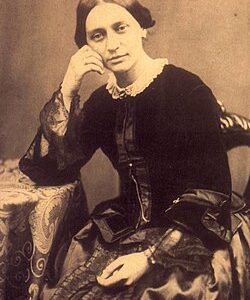
Though often remembered primarily as her husband’s muse, and though her relationship with Brahms has received much speculation over the years, we feature Clara Schumann as the remarkable composer she was, particularly skilled in the Lieder genre (German Art songs). While she never wrote for the string quartet, these arrangements of some of her most beloved lieder display her compositional prowess and her sensitive phrasing that can be heard in many of Brahms’ works. Brahms greatly admired her musicianship and valued her feedback on his work above all else.
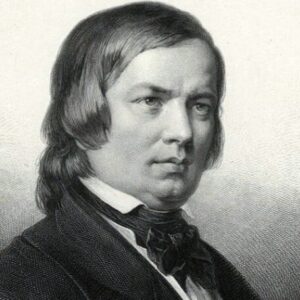
Robert Schumann wrote his three string quartets as part of a remarkable burst of creativity in 1842, often described as his ‘year of chamber music’. Two years previously, he and Clara had finally married after many years of personal and legal struggle with Clara’s father who did not approve of the match. Clara, an incredibly talented pianist and composer in her own right, was Robert’s muse, artistic collaborator and most perceptive critic. The first movement, which we will hear today, is deeply lyrical and intimate with many scholars hearing Schumann’s devotion for Clara in the work. Clara herself said that Robert’s set of three string quartets revealed his “most tender and beautiful side.” It was more than a decade after this work was composed when Brahms was welcomed into Clara and Robert’s world, and yet the lyricism and emotional depth of Robert’s quartets left a lasting impression of Brahms’ own approach to quartet writing.
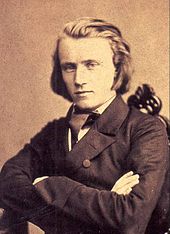
Johannes Brahms took the string quartet very seriously and struggled with it more than any other form. He felt the weight of those who had gone before, most particularly Beethoven and Schumann, and destroyed more than a dozen attempts before allowing anything to be published. He was finally satisfied with his String Quartet No. 1 and described it to Clara as “one of my finest works… You have never before had such a beautiful work from me.” The Romanze is unusually exposed and vulnerable, and many scholars believe the movement speaks to Clara.
Come on this journey with us. Help us make many generations of musicians and music lovers in Galway and beyond.
Support Us